“When nothing seems to help, I go and look at a stonecutter hammering away at his rock perhaps a hundred times without as much as a crack showing in it. Yet at the hundred and first blow it will split in two, and I know it was not that blow that did it, but all that had gone before.”
— Jacob Riis, Late 1800s
As I reflect on my accomplishments in athletics and education, I am reminded of the Stonecutter’s Credo. The pinnacle of my athletic career came with a National Championship in 1995, and in 2023, I was honored as District 11 Middle School Principal of the Year. What I’ve realized is that these successes were not the result of a single, defining moment. Rather, they were the culmination of countless daily efforts—like the stonecutter, each blow led me closer to breaking the rock. Success came after thousands of small efforts: thousands of hours in the gym, and thousands of decisions made as a principal.
In education, we may never see the full impact of our efforts. As teachers, we work with students for just a year, and they spend only a few years in our buildings. Our role is to plant seeds that will grow over time. We strive to inspire our students to become lifelong learners, teaching them how to learn through our daily actions. The Stonecutter’s Credo is deeply relevant in education—we, as educators, must pound the rock every single day.
The Stonecutter’s Credo also resonates with us as parents and guardians, especially during the middle school years. At this age, our children are still far from fully formed. Our goal is to guide them into becoming productive members of society, though we may not see the results for years. All we can do is pound the rock each day. By setting an example with our actions, establishing expectations, setting limits and boundaries, supporting their interests, and loving them unconditionally, we actively “parent.” Parenting is a verb—it requires daily action.
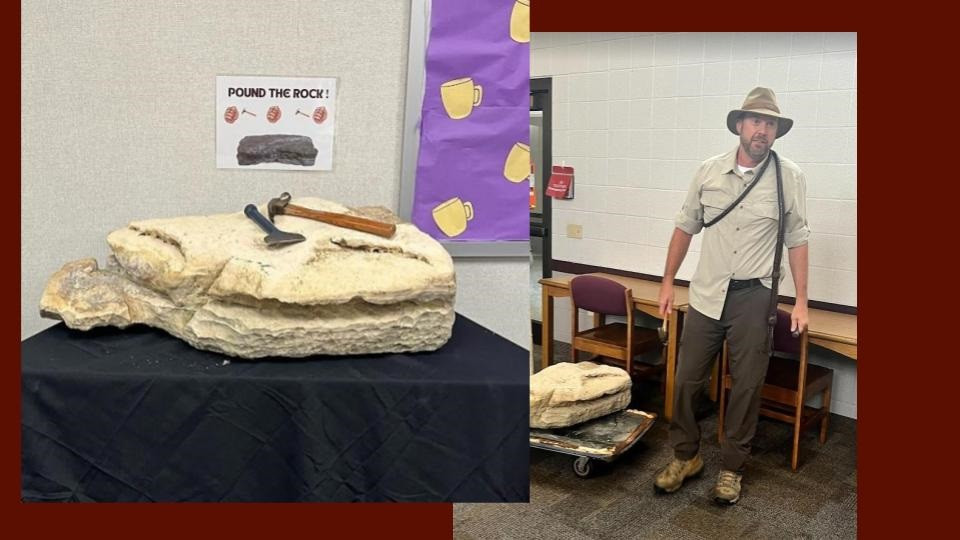
At Mt. Vernon Junior High, we’ve placed a rock, hammer, and chisel in our teachers' lounge as a reminder of the Stonecutter’s Credo. We want to pound the rock each day, knowing that each blow, though it may not crack the rock immediately, brings us closer to our goals. Together, we aim to inspire each other to be the best versions of ourselves, making a positive impact in our students’ lives through our daily actions.
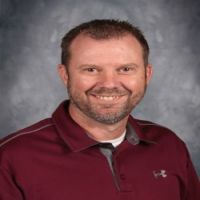
Marc Hostetter
MVJHS Principal